OAKHEART
The first complete near-term ecosystem for the Moon, Mars, and beyond.
One repeating architecture. Five reusable ships. One central hub. Artificial gravity. Existing technology. No decades of waiting.
- Ships
- 05
- Central hub
- 01
- Roles
- 06
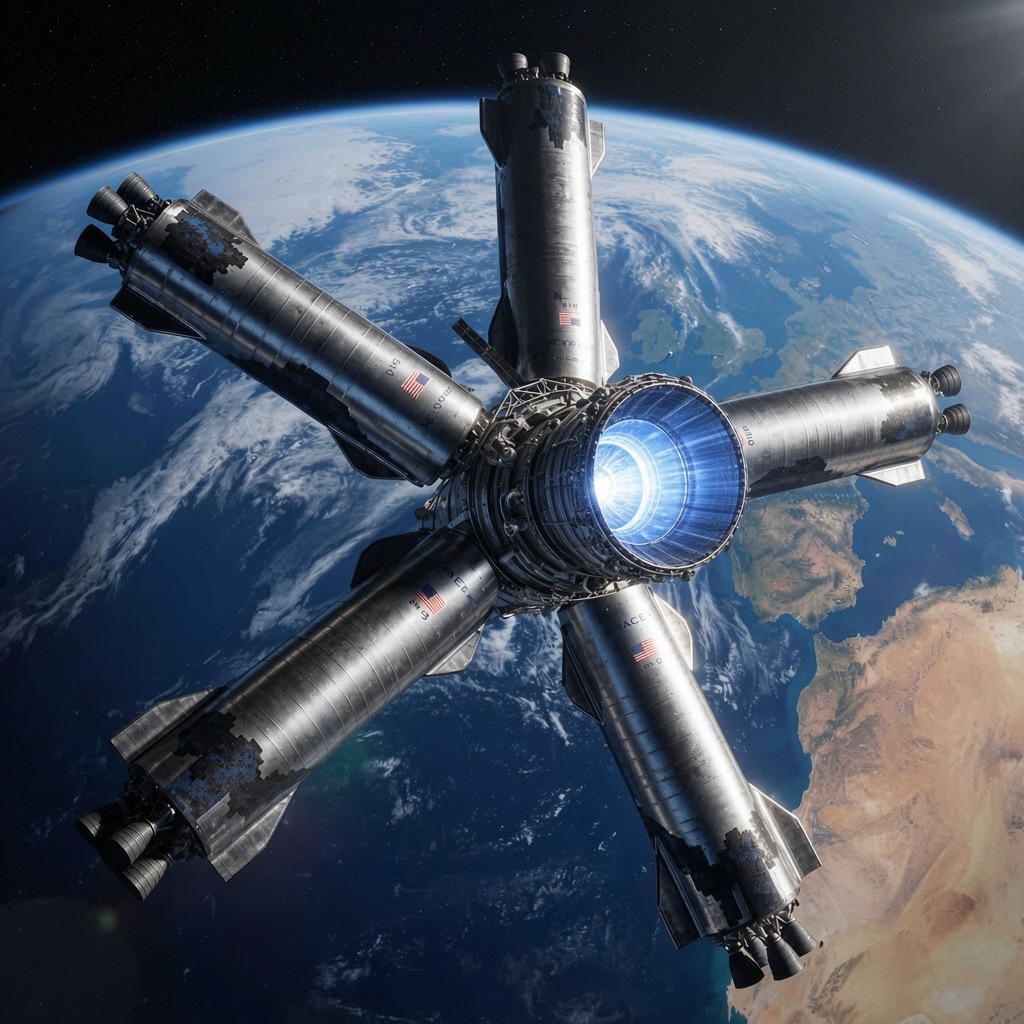
Humanity does not need new vehicles that will take fifteen years to invent. We need a system that uses what already exists.
Reusable ships, proven docking interfaces, methalox propulsion, nuclear thermal concepts, and autonomous robotics — arranged in a single elegant architecture that can carry people, robots, cargo, fuel, data, and life-support infrastructure in one integrated flow. OAKHEART is that system.
Key principle
Infrastructure that exists now.
Built on four principles
Design ethosSimplicity
One physical stack, reconfigured for every role. No bespoke ships per mission.
Reusability
Every ship retains full landing capability. The hub becomes a permanent node.
Existing hardware
Methalox engines, docking interfaces, and autonomy that are operational today.
Capability per window
Maximum people, cargo, fuel, and infrastructure per launch opportunity.
The same five-ship complex flies every mission the ecosystem needs.
The architecture is defined.
The only remaining step is to build it.